Cultural Heritage and Classification
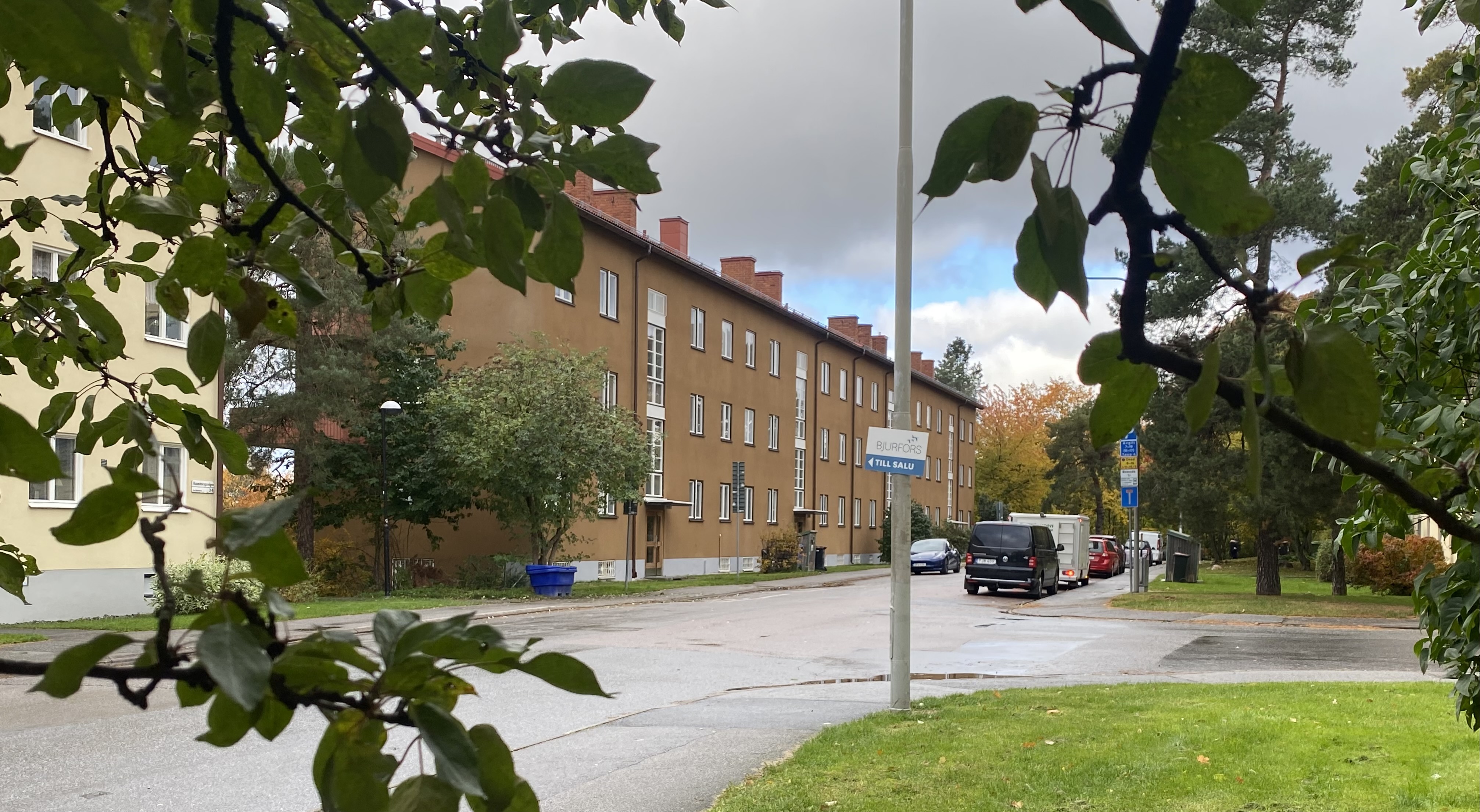
The City Museum of Stockholm has culturally classified the entire district of Traneberg, with its characteristic narrow houses from the latter part of the 1930s. Typical of the narrow-house style are the smooth-rendered facades with balconies and undivided windows.
The housing cooperative Drömkåken 2 is located in the Halleberg 2 block in Traneberg, at Hunnebergsvägen 11 and 13. The other half of the building, numbers 15 and 17, is owned by the housing cooperative Halleberg 1.
The Berlin Inspiration
The inspiration for the development in Traneberg came to Stockholm's city politicians and officials at a housing exhibition in Berlin in the early 1930s. The concept featured narrow three-storey buildings that let in light from all sides. The apartments were small but well-planned, most of them two rooms, kitchen and bathroom at 51 square metres, with six apartments per stairwell.
All apartments had balconies and storage rooms. From the start, the apartments had electricity and running water. The bathrooms featured bathtubs and flush toilets. The buildings had central heating, a shared laundry room, a carpentry workshop and a food cellar. On each floor there was a rubbish chute; these are now sealed. All of this was, when the buildings were constructed, a luxury that few could afford.
Shortly after the much-discussed Berlin trip, the city plan for Traneberg was drawn up. The area became the first suburb of its kind in Stockholm, but would be followed by many more. Construction in Traneberg began in earnest in 1934 and continued for five years.
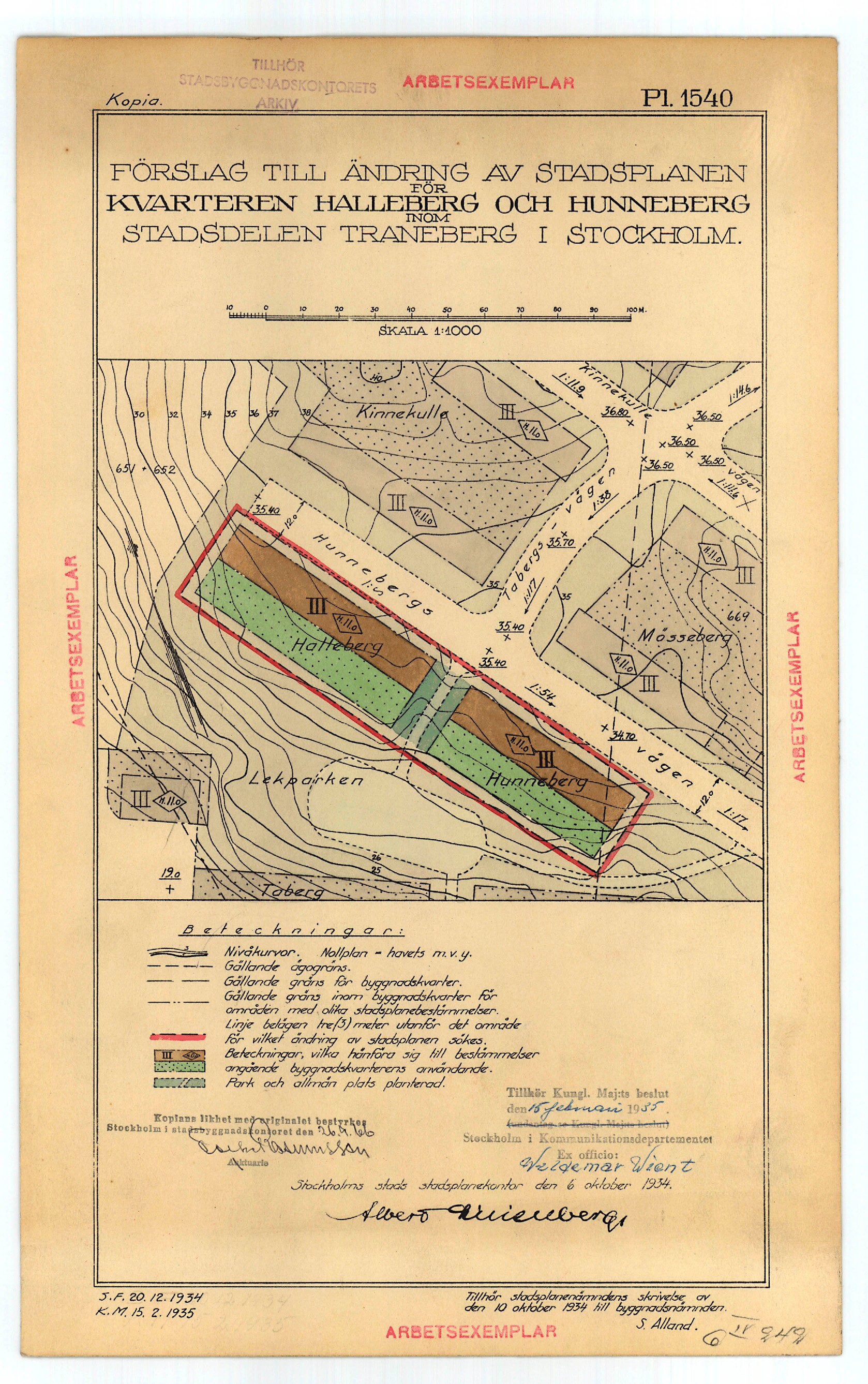
The Bergström Brothers Step In
On 31 August 1934, the Traneberg Bridge was inaugurated and Stockholm's westward expansion began. The city had arranged the land purchases well in advance. A couple of months after the grand inauguration of the bridge, the private construction firm Bröderna Bergström (the Bergström Brothers) in Stockholm, with brothers Bror and Karl, submitted an application to erect a residential building "on plot no. 2 in the Halleberg block within Traneberg". Karl is listed as a construction engineer in the letter.
There were initially three parties involved in the property. There was the city with its various departments, the developer, and finally the building owner. By the time the developer entered the picture, the road, the street name, the block and the plot map already existed.
The application had barely landed on the building committee's desk before the work to get the project started began. It moved remarkably fast. Already in January 1935, the city's own-home bureau, under the direction of architect Edvin Engström, had produced drawings and construction documents. Engström served 45 years in the city's employ and was responsible for around a thousand buildings in Stockholm's suburbs, including this one.
The entire building project for Halleberg 1 and 2 took one year, from the first document to final inspection. By March 1935, all decisions had been made so that the Bergström brothers could break ground. It took them six months to complete the building. At the turn of September and October, the first tenants moved in. By December, the building had been inspected and was complete.
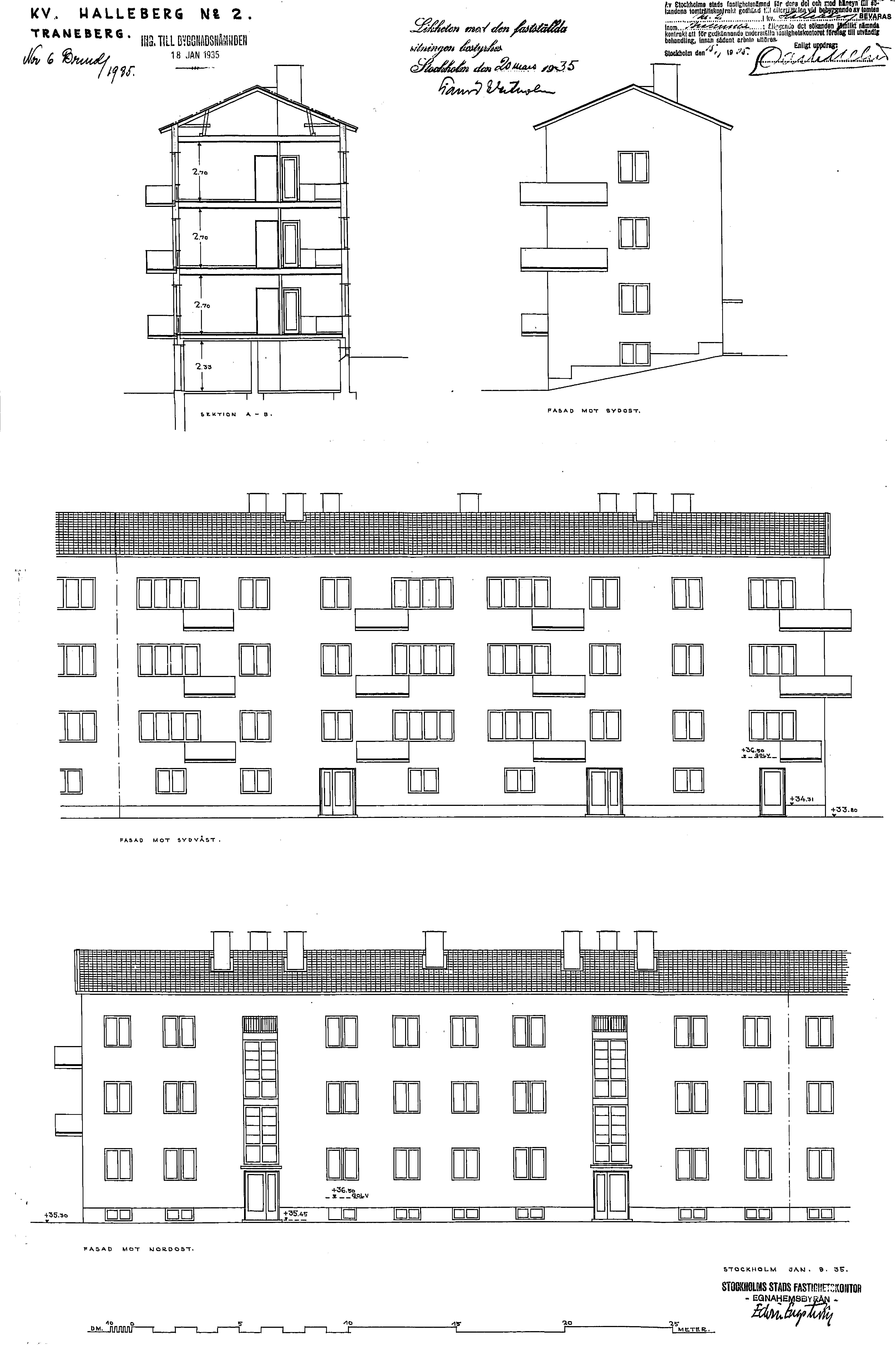
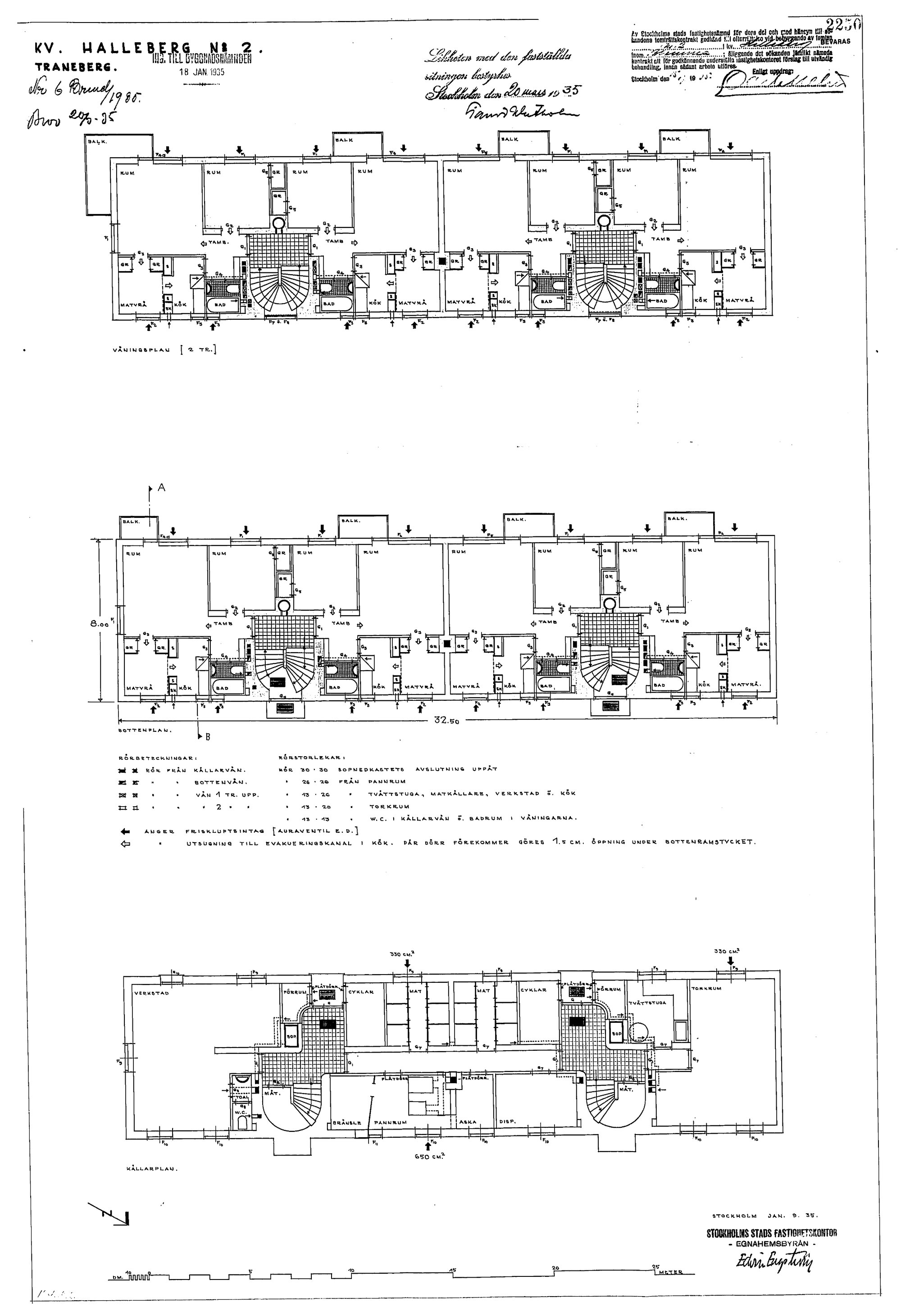
The Construction Firm Sold the Building
When the building was completed, it was sold to a family that would own it for more than half a century. It was the businessman and director Ernst Anderberg with his wife Binéa, born Österberg, and their children and grandchildren. They remained landlords until the late 1980s.
At that point, half the property, Halleberg 2, was sold to a new family of owners, who in turn after only nine years sold it to the newly formed Brf Drömkåken 2. The other part of the property remained with the original owning family for nearly another 20 years, when the housing cooperative Halleberg 1 was formed.
The Tenants
In early October 1935, the first tenants moved in. According to the church's immigration records, it took a year before all apartments were occupied. They did not all arrive at once but trickled in gradually.
Most of those who moved in were between 26 and 46 years old, single or in couples, many newly married. There was an engineer, a merchant, a gardener, a department head, a station clerk, an accountant, a managing director, a draughtsman, a maid, a housekeeper, several unmarried women and divorcees. In the beginning, turnover was high. Nearly half moved out after one or a few years, but among those who stayed, many stayed for a very long time.
Some moved in as elderly. The oldest was Miss Hilma Bundsén, 83. She was born in 1852. Despite her advanced age, she still lived in the property for a full 11 years.
The building's perhaps most famous resident was also a woman and was elderly when she moved in. She was the highly educated musician Elsa Stenhammar. She was 70 when she left Gothenburg for a move to Traneberg. She was Sweden's first major female choral conductor and, in addition to being a choir leader, also an organist and singer. She remained in the building for about 20 years.
Another who stayed for a long time - indeed the longest of all - was the clerical assistant Margit Fryklöf. She was one of the first to move in, into an apartment on the third floor. She was 28 years old and divorced. She brought with her her six-year-old son. Margit Fryklöf lived on until the housing cooperative was formed in 1997, that is, for over 60 years.
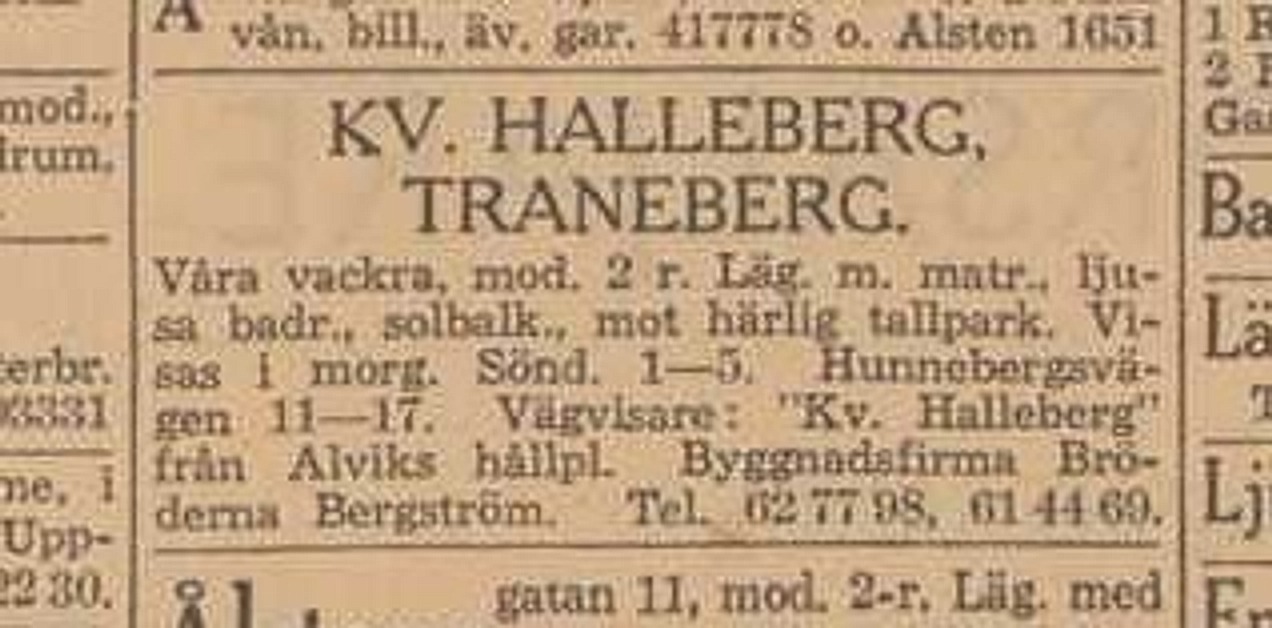
From Dagens Nyheter - available apartments
Advertisements placed by the construction firm Bröderna Bergström, 1935-1936.
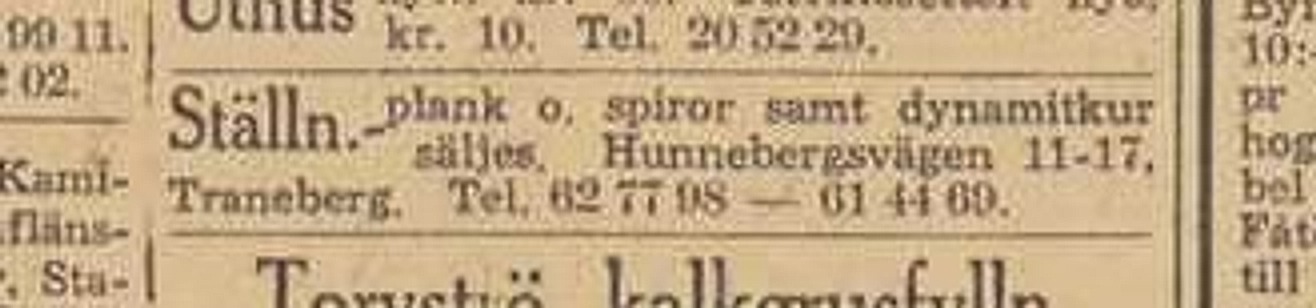
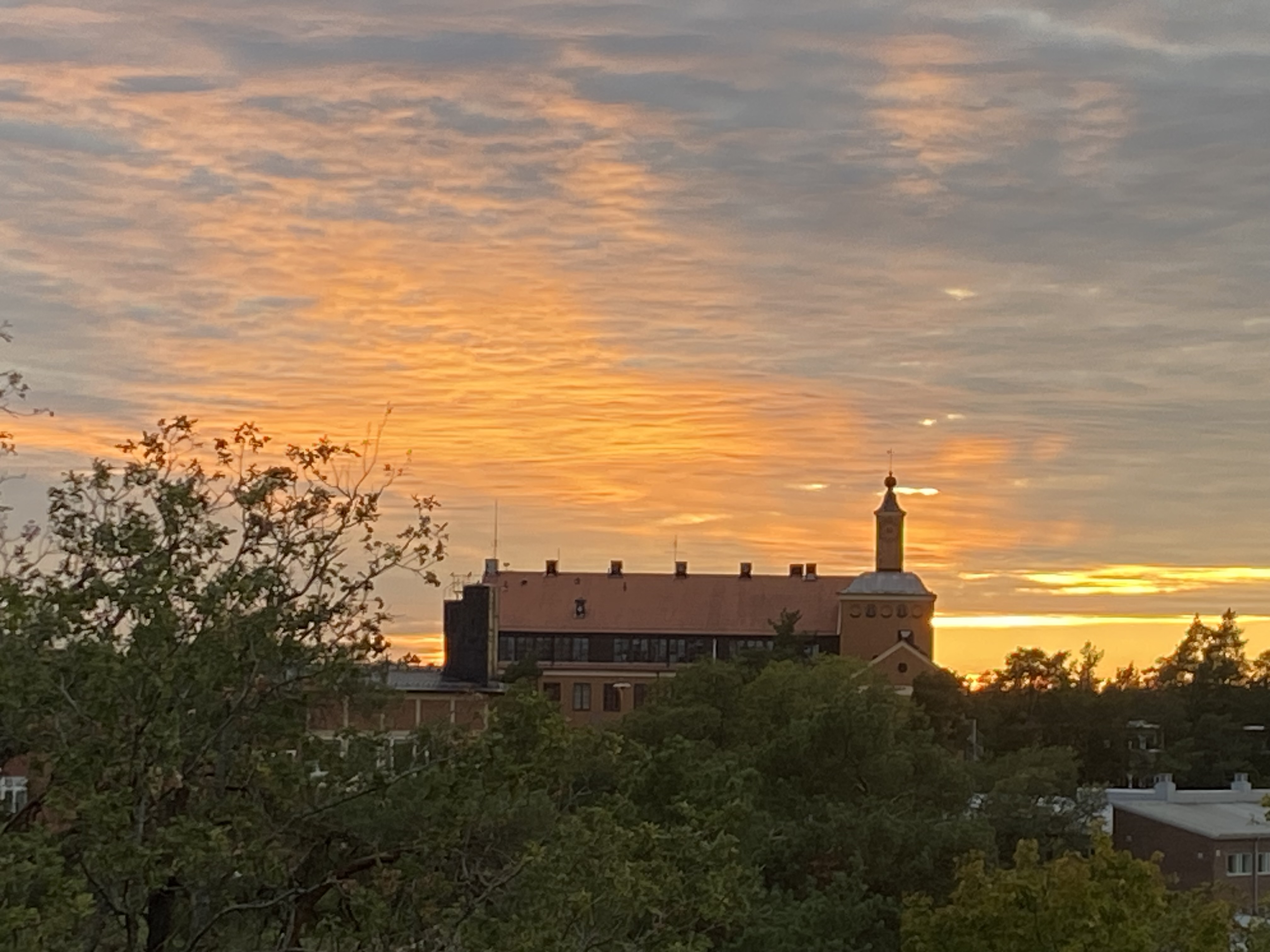
Drömkåken 2
Today, half the building is owned by Brf Drömkåken 2, formed in 1997, and the other half by Brf Halleberg 1, formed in 2016.
The couple who had purchased the Halleberg 2 property in the late 1980s, when they were considering selling, first put the question to the tenants whether they wished to take over and form a housing cooperative. They took the bait. One of those who had lived in the building for a long time and still does was Fredrik Johannesson. He gathered a group around him and began the process. In December 1997, the purchase was complete and the housing cooperative Drömkåken 2 was formed. Fredrik became the association's first chairman and jack-of-all-trades, remaining so for nearly two decades. Today the chairman is Alexander Norman.
Why the name Drömkåken 2? The inspiration came from the then-current film Drömkåken (The Dream Shack), about a house harbouring a life-threatening secret. A certain gallows humour was behind the name, says Fredrik, continuing: "We didn't know whether we were making a good or bad choice when we formed the association. Times were different then compared to now, and no one could have predicted the price development."
Sources
- Archives at Stockholm City's Planning Office
- Stockholmskällan (Stockholm Source)
- Census rolls and Bromma parish church records via the National Archives and Arkiv Digital
- The Swedish National Heritage Board's building register
- Smalhus Framtidshem! (Narrow Houses - Homes of the Future!) Report from the Swedish Council for Building Research 1978
- Conversations with Fredrik Johannesson, former chairman of Brf Drömkåken 2 and driving force behind the formation of the association
- Conversations with Jan Ekstrand, former chairman of Brf Halleberg 1, previously the property's caretaker and handyman, and married to the grandchild of Ernst and Binéa Anderberg
Research and text: Ingalill Tengvall
Original Details and Wall Paintings
Our building retains many original details from when it was built, including the wall paintings by the entrances. During a later repainting of the stairwells, the wall paintings were preserved, though in a cropped state.
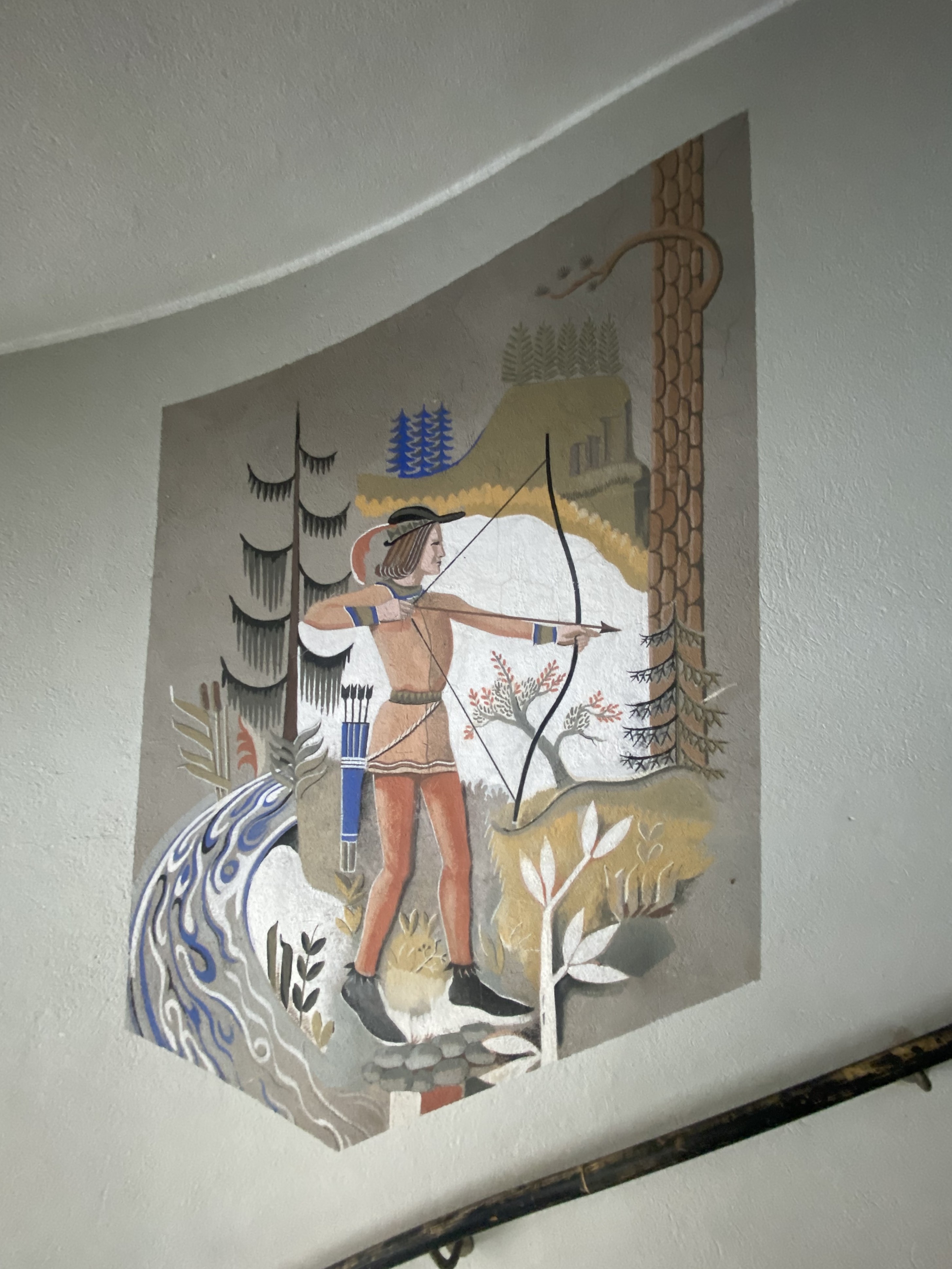
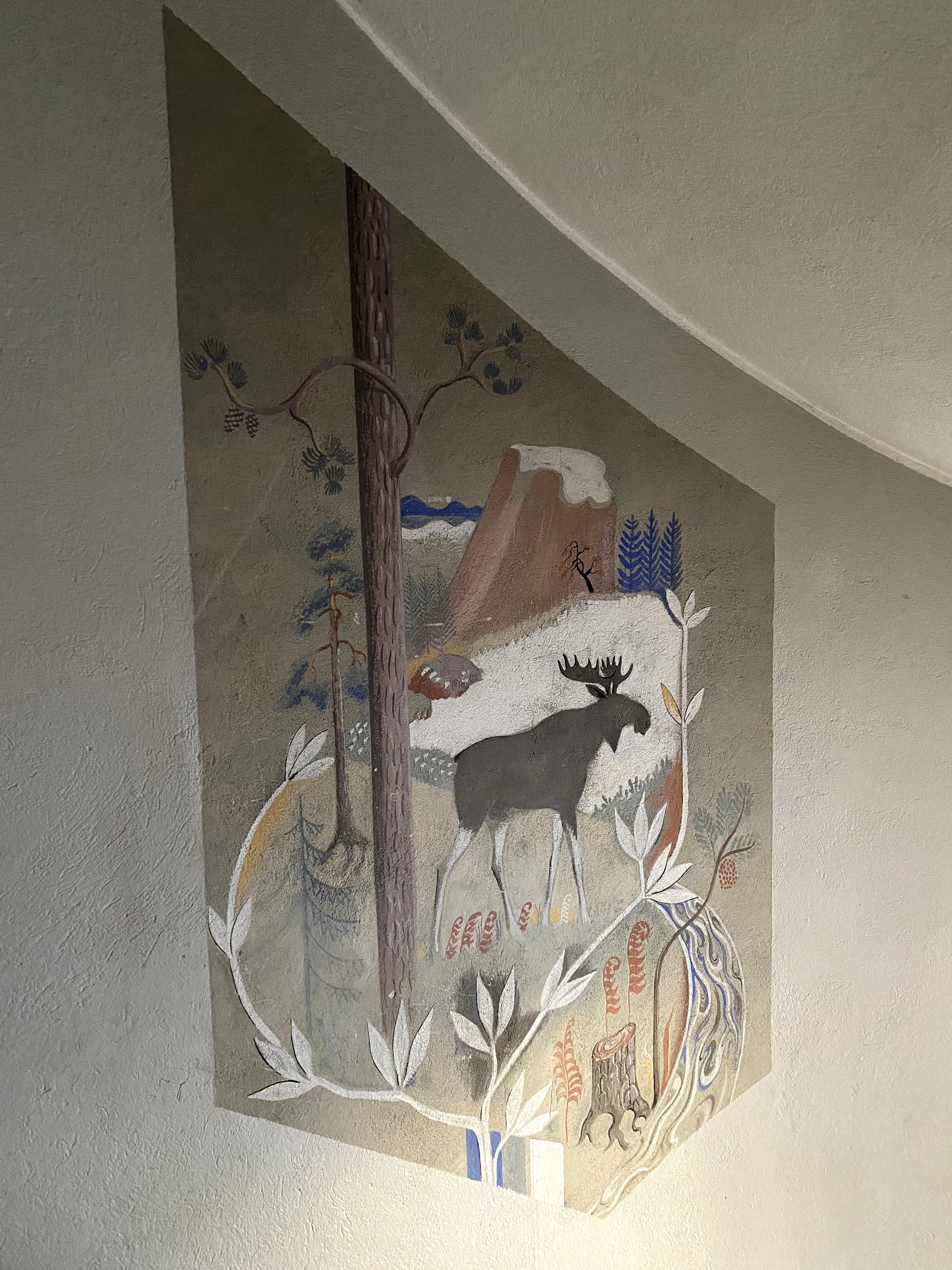
The identity of the painter is unknown. During the Stockholm City Museum's survey of the buildings in Traneberg in 1985, an attempt was made to interpret a signature found on a preserved painting in the neighbouring association, but without success. During the 1930s there were many skilled professional painters who decorated stairwells and wall sections. Many of these paintings are still preserved in Stockholm's older housing stock, as in our building.
The original colour in our stairwells is the base colour of the wall painting, which over the years has likely darkened from soot and dirt. If the painting is to be cleaned, one must know what binding agent the painter used - oil or distemper, how strongly or weakly the pigment is bound. This determines how resilient the surface is to cleaning. In due course, the association will need to bring in expertise when repainting the stairwells.
Show more original details
The stairwells still have their original light fixtures - beautiful globe lamps in brass, typical of the 1930s. In the attic, the original fire regulations sign from the City of Stockholm remains, with instructions signed by the Fire Chief.
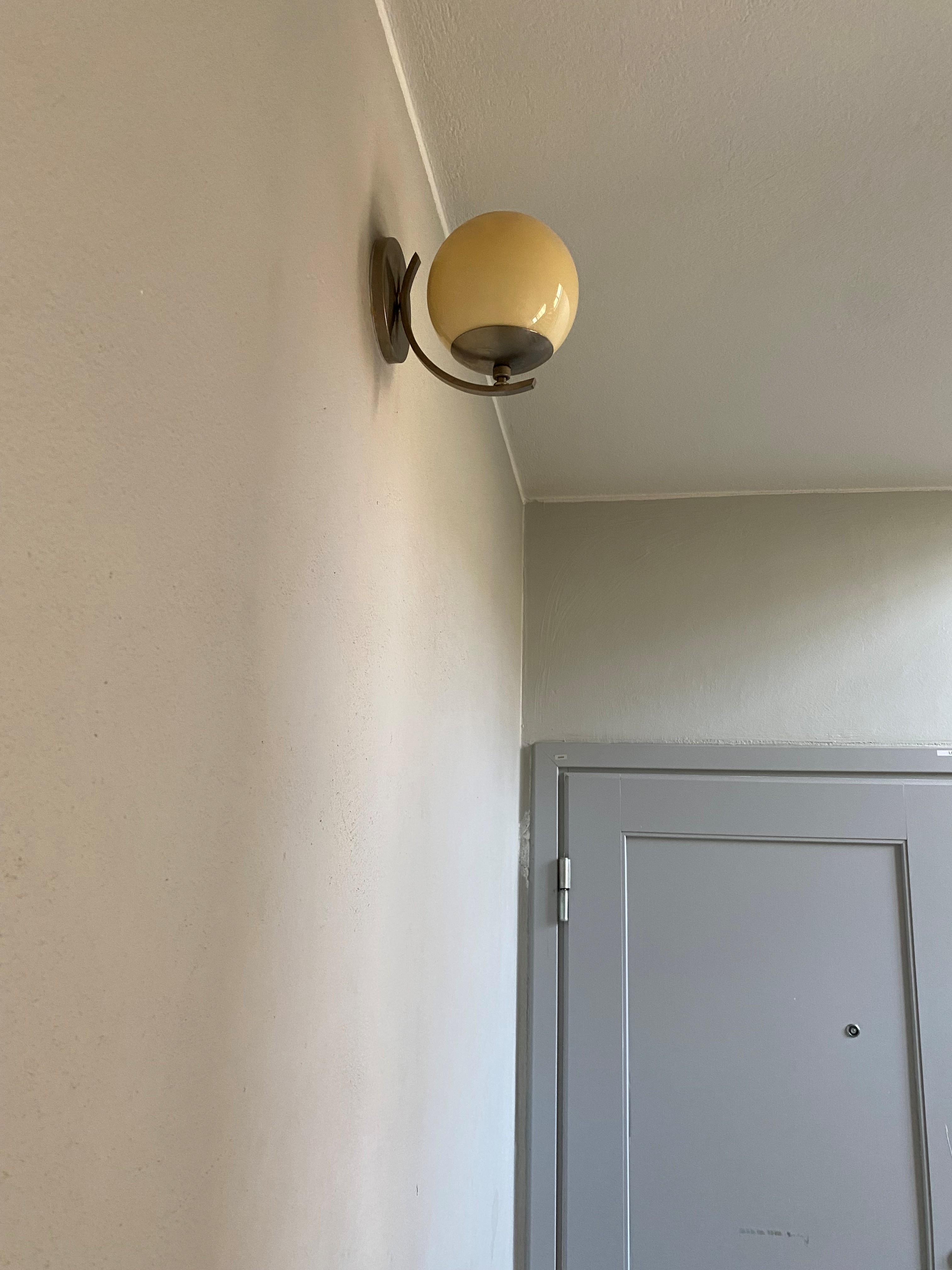
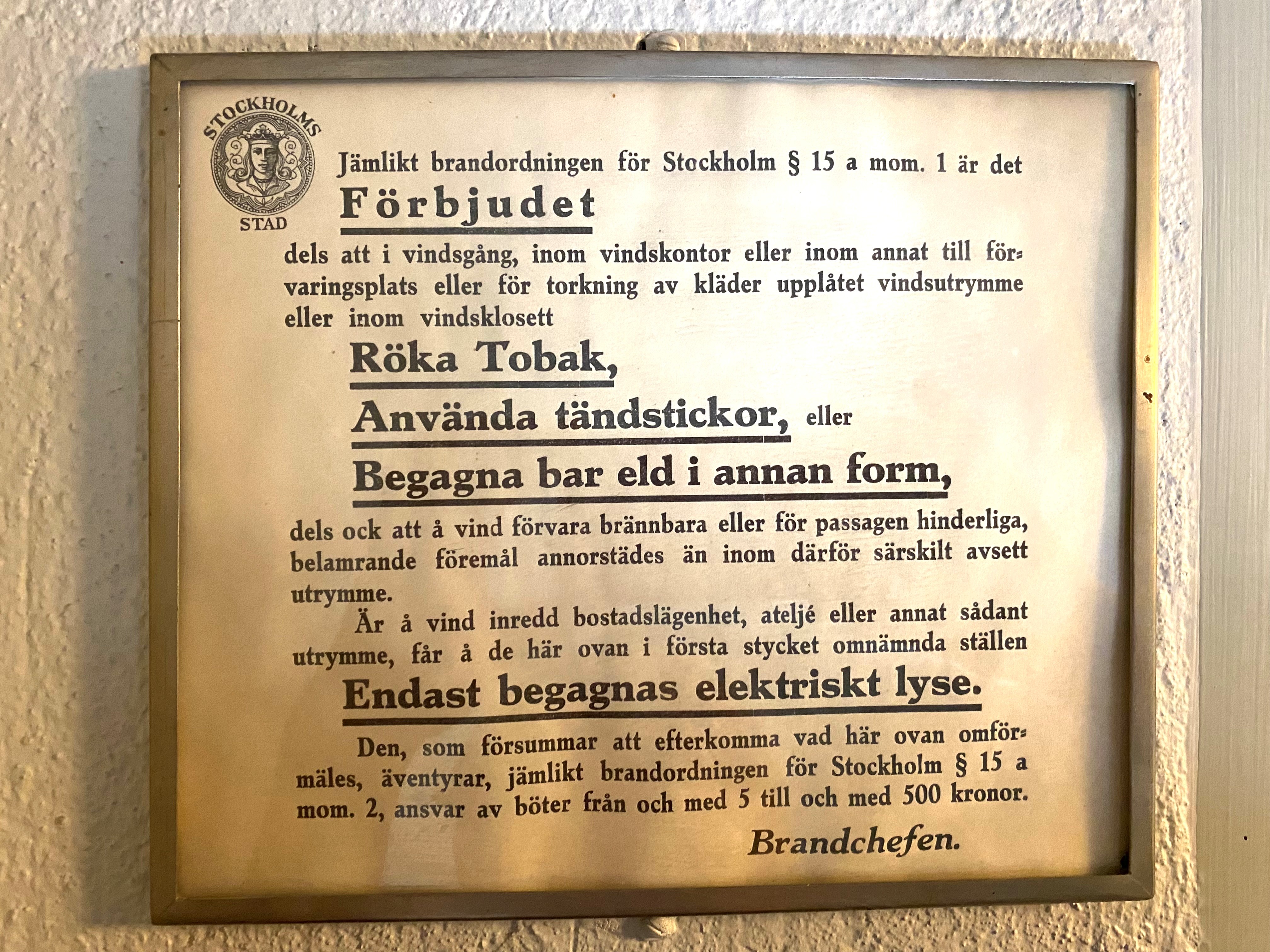
Photo Gallery
.jpg)